


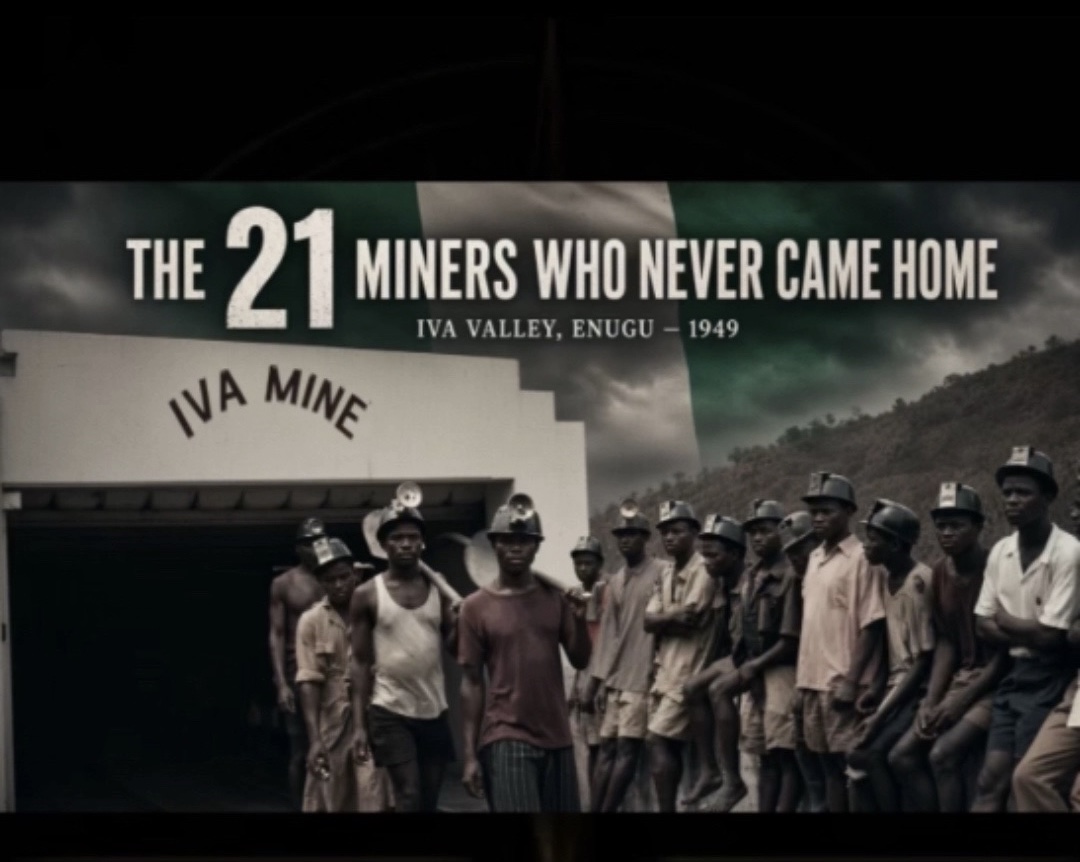
IVA VALLEY, ENUGU – NOVEMBER 18, 1949.
On October 1st, we celebrate independence. We post the flag. We say Happy Independence.
But 77 years ago, 21 men woke up, put on their helmets, and went to work inside Iva Mine. They never came back home.
This is the story they didn’t teach you in school.
THE REASON THEY STRUCK
It was not greed. It was not politics.
For months, the British colonial masters had refused to pay them what was theirs. Money called “rostered days” back-pay for work they had already done with their bare hands, deep inside the dark, dangerous coal pit.
The miners were tired. Their wives were hungry. So they did the only thing a worker can do.
They stopped work. They sat down inside the mine and said: “We will not work until you pay us.”
To the British, this was not a labour dispute. This was rebellion.
Why are the British afraid?
Iva Mine was not just any mine. It was the engine of the entire British Empire in West Africa. It powered the ships. The trains. And inside it were BOXES of explosives “dynamite”.
The white officers panicked, They believed the miners were being controlled by the “Zikists” — followers of Nnamdi Azikiwe, the nationalists who were already shouting “FREEDOM!”
Their fear? “If these miners take this dynamite, they will give it to Azikiwe and start a revolution.”
So they called the police. Not to negotiate. To CLEAR the mine.
On November 18th, 1949 was the day the ground turned red.
The miners were unarmed. No guns. No sticks. Just helmets and coal dust on their faces.
A police Superintendent named Phillips arrived with his men. He said the miners must leave.
One of the miners, a simple tubman, stepped forward. He was confused. He asked: _”Anything wrong?”_
He was shot dead on the spot.
Then hell broke loose.
The police opened fire on the crowd inside the valley. Men ran. Men screamed. Men hid behind coal wagons, but the bullets found them.
When the shooting finally stopped…
21 bodies lay on the ground. 51 others were wounded, bleeding, crying for help.
All because they asked for their own wages.
Read their names and never forget them:
Sunday Anyasodo, Livinus Okechukwuma, Ngwu Nwafor, Agu Ede, Okafor Ageni, Thomas Chukwu, Jonathan Ezeani, Ani Amu, Onoh Onyia, Nnaji Nwachukwu, Simon Nwachukwu… and 10 others.
21 fathers who never saw their children again.
THE FIRE IT STARTED
But the story did not die in that mine.
News spread like wildfire. The DAILY TIMES headline screamed: “ENUGU ENQUIRY: CHIEF COMMISSIONER TELLS WHY POLICE SHOT MINERS”
Lagos was furious. Kano was furious. The whole country asked one question: “HOW CAN THIS HAPPEN IN OUR OWN COUNTRY?”
The massacre became a weapon for our nationalists.
People who were scared to speak before now found their voice. Market women, students, workers ,everyone joined. Even the great Margaret Ekpo, the woman I told you about in my last story, used the massacre to organize women to fight the colonialists.
The Iva Valley blood became the ink that wrote our independence.
Years later, a famous political scientist, Richard Sklar, said something deep. He said this massacre may have helped create something we never had before…
A stronger sense of being Nigerian.
Before, we were Igbo, Yoruba, Hausa. After Iva Valley, we started to feel: “We are all Nigerians. And these people must go.”
A tragedy in Enugu became part of a national story.
So today, as we celebrate 66 years — October 1st, 1960 to 2026 — remember.
We celebrate the politicians who signed papers in Lagos.
But remember the 21 miners who paid with blood in Enugu.
Their deaths became part of Nigeria’s journey to independence.
May their souls rest in peace.


